Blogs

SPME vs. TF-SPME: Comparing Extraction Capacity, Analyte Response, and Compound Coverage

For the past few decades, as analytical labs have looked to reduce their environmental impact, solvent-free extraction techniques have gained popularity. One of the most well-known techniques is solid phase microextraction (SPME), pioneered in the early 1990s.

SPME

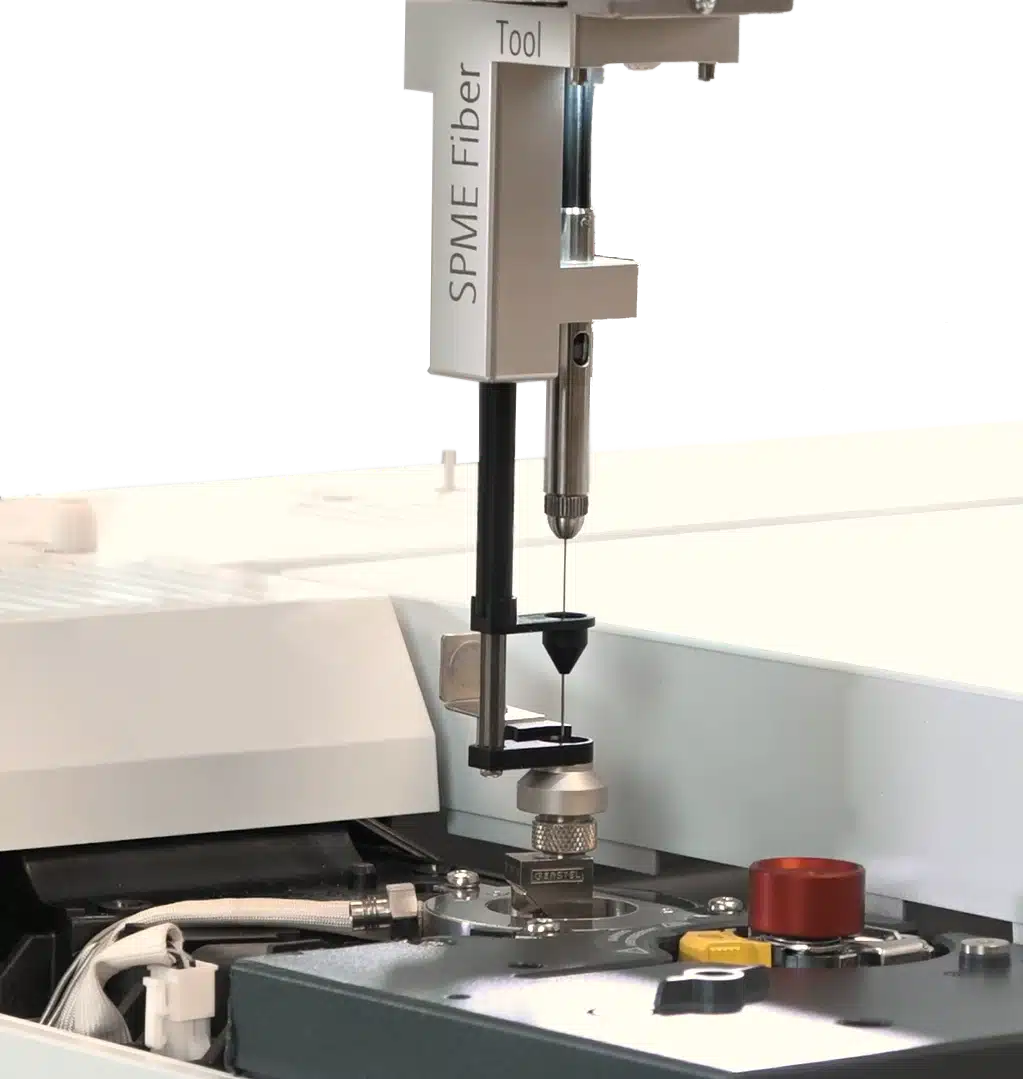
SPME consists of a coated fiber in a syringe-like holder, which extracts and enriches volatile and semi-volatile compounds from a sample. The SPME fiber can be used in the sample headspace or immersed in a sample solution. It is readily automated and offers quick extraction while remaining a trace-level technique. The SPME fiber inserts directly into the GC inlet for desorption and GC-MS analysis.

Diagram of SPME Workflow (Immersion)

TF-SPME

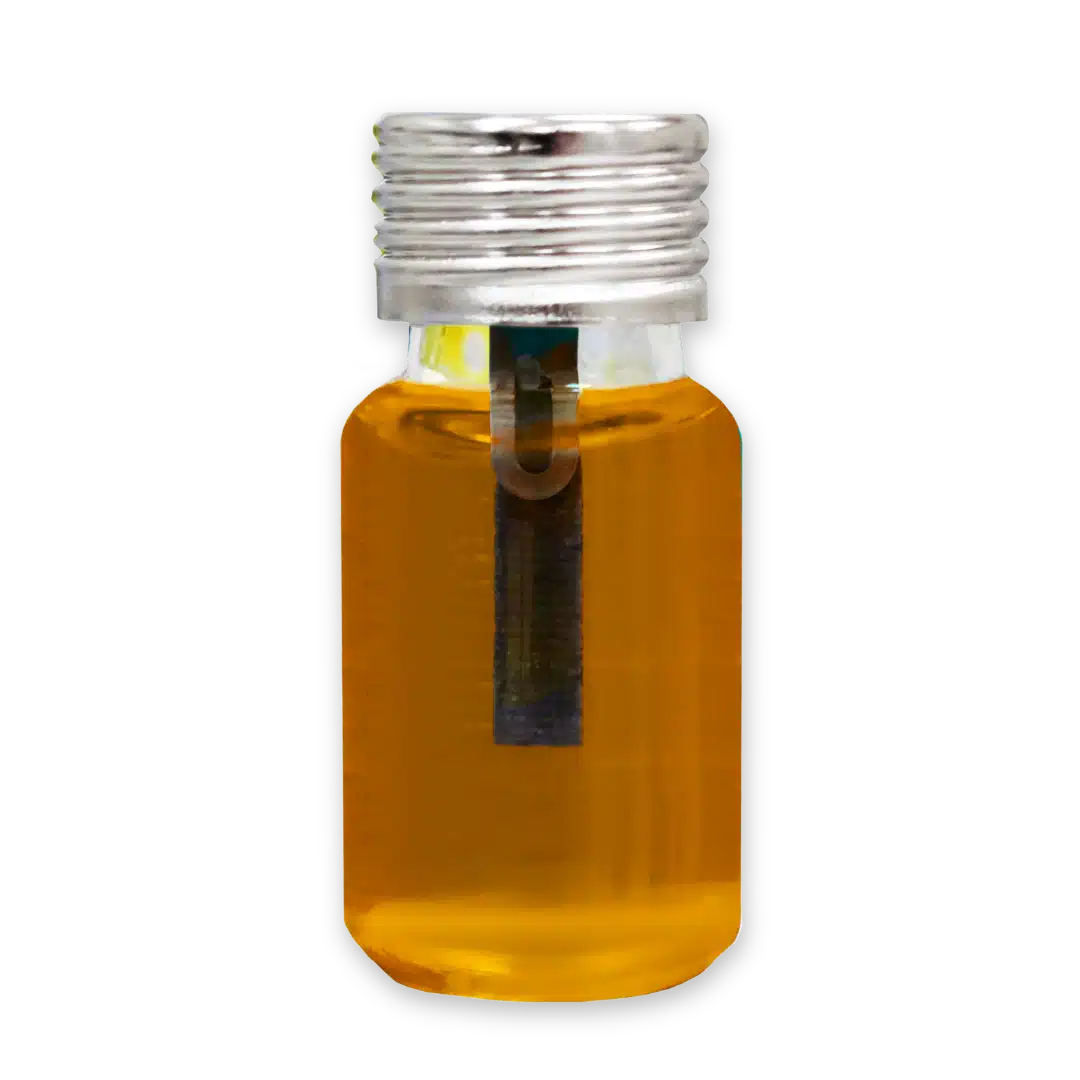
A more recent extension of conventional SPME, thin film-solid phase microextraction (TF-SPME), includes a carbon mesh impregnated with different sorptive coatings. The larger surface area and phase volume enable higher capacity, lower detection limits, and greater analyte response. It also provides more versatile sampling options, including direct-contact sampling, as well as the headspace and immersion options offered by SPME. After analyte collection, the TF-SPME membrane is desorbed in a GERSTEL Thermal Desorption Unit (TDU) for GC-MS analysis.

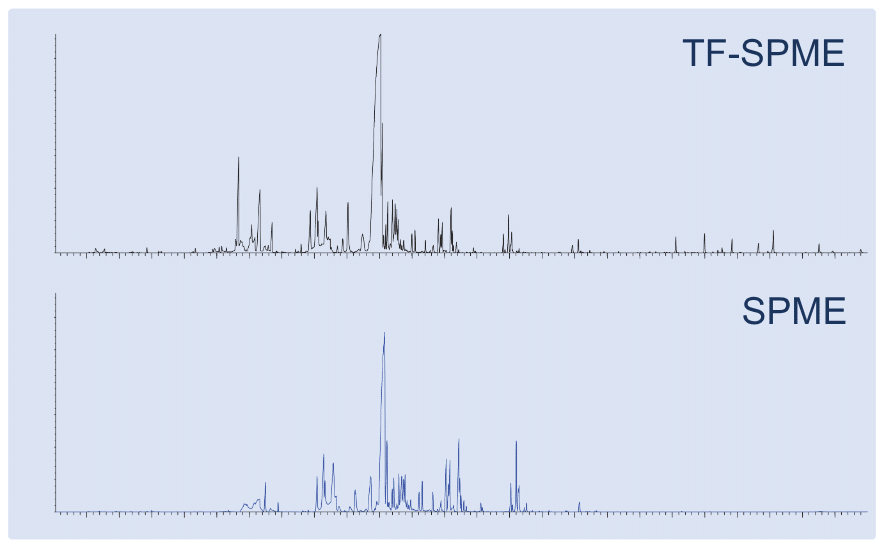
Diagram of TF-SPME Workflow (Immersion)

Both techniques offer multiple sorptive phase options, including CAR/PDMS, DVB/PDMS, and DVB/CAR/PDMS for SPME, and DVB/PDMS and HLB/PDMS for TF-SPME.

For liquid samples, TF-SPME can also be combined with GERSTEL Twister® stir bar sorptive extraction (SBSE). Combining the two extraction formats in a single workflow expands analyte coverage across a wider polarity range, and both devices can be thermally desorbed together for a single TD-GC-MS analysis.

Comparison Case Studies

Fragrance Profiling: AppNote 305

In a recent study, GERSTEL scientists compared a gauze-based SPME approach using DVB/CAR/PDMS with direct-contact TF-SPME using HLB/PDMS for sampling fragrance applied on skin.

Because the membrane can be positioned at the skin’s surface, TF-SPME is a useful technique for extracting fragrance from skin under real-world conditions. Gauze swabbing and other approaches followed by SPME may disrupt the skin or miss highly volatile compounds.

While both techniques produced similar overall fragrance profiles, TF-SPME detected a broader range of analytes. Of the 177 analytes detected by TF-SPME, 43 were not detected by SPME, while only four analytes were unique to SPME.

Stacked view of TICs of TF-SPME sampling (top) and SPME sampling (bottom).

The greater sorbent phase volume and surface area available with TF-SPME reduced competitive effects, resulting in higher analyte responses, especially for early-eluting compounds.

Beverage Application: AppNote 200

Another GERSTEL study compared SPME and TF-SPME extraction performance for white wine samples. Similar to the fragrance study, TF-SPME showed a much higher analyte response than SPME, especially for early-eluting compounds.

Stacked view of total ion chromatograms and identified compounds for a Sauvignon Blanc/Gewurztraminer blend wine using SPME (top) and TF-SPME (bottom)

Food Odorants: Peer-Reviewed Study

A recent peer-reviewed journal article [1] comparing different solid-phase microextraction formats found that HLB/PDMS TF-SPME provided greater extraction efficiency than an immersive SPME fiber and other extraction devices for all 11 food odorants evaluated. Because different sorptive phases were used, the results reflect both the TF-SPME format and HLB/PDMS selectivity.

When Greater Extraction Capacity Matters

For labs running established methods or prioritizing cost-effectiveness, SPME is a well-established technique that is simple to use and easy to automate. It is a viable option if it provides sufficient recovery or detection limits that fit the lab’s needs.

When applications require trace-level analysis, broader analyte coverage, or higher analyte response, TF-SPME offers clear advantages. Its larger surface area and phase volume enable greater sorbent capacity—15 times the phase volume compared with the regular SPME format. Additionally, TF-SPME offers a direct-contact sampling mode, which can be particularly useful for fragrance applications involving surfaces such as skin.

When conventional SPME leaves trace-level compounds undetected, TF-SPME’s additional sorbent capacity and phase options can provide a more complete view of the sample profile.

Reference

  1. Wieczorek, M. N. (2024). Comparison of different solid-phase microextraction formats dedicated to the analysis of volatile compounds—A comprehensive study. Molecules, 29(21), 5137. https://doi.org/10.3390/molecules29215137

Learn More About TF-SPME Applications: