The Role of Extraction
Sensory profiling of products in the fragrance, flavor, and food and beverage (FFF/B) markets is imperative for understanding the consumer experience. Sensory profiles provide valuable information about compounds that influence product quality, human perception, consistency, and even authenticity.
Because the extraction step determines which compounds are introduced and detected, selecting the appropriate extraction technique is critical for accurately representing both chromatographic and sensory profiles.

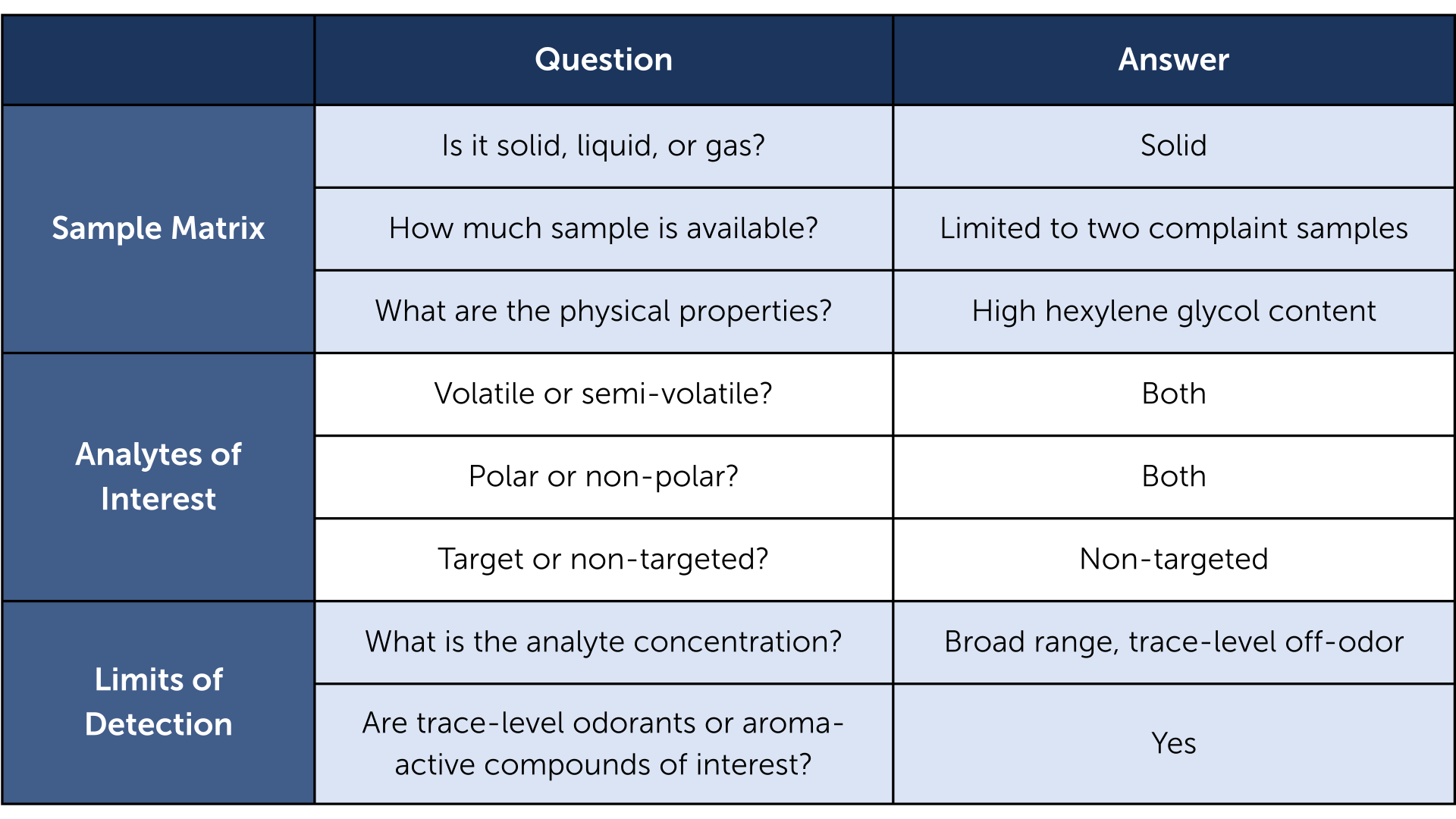
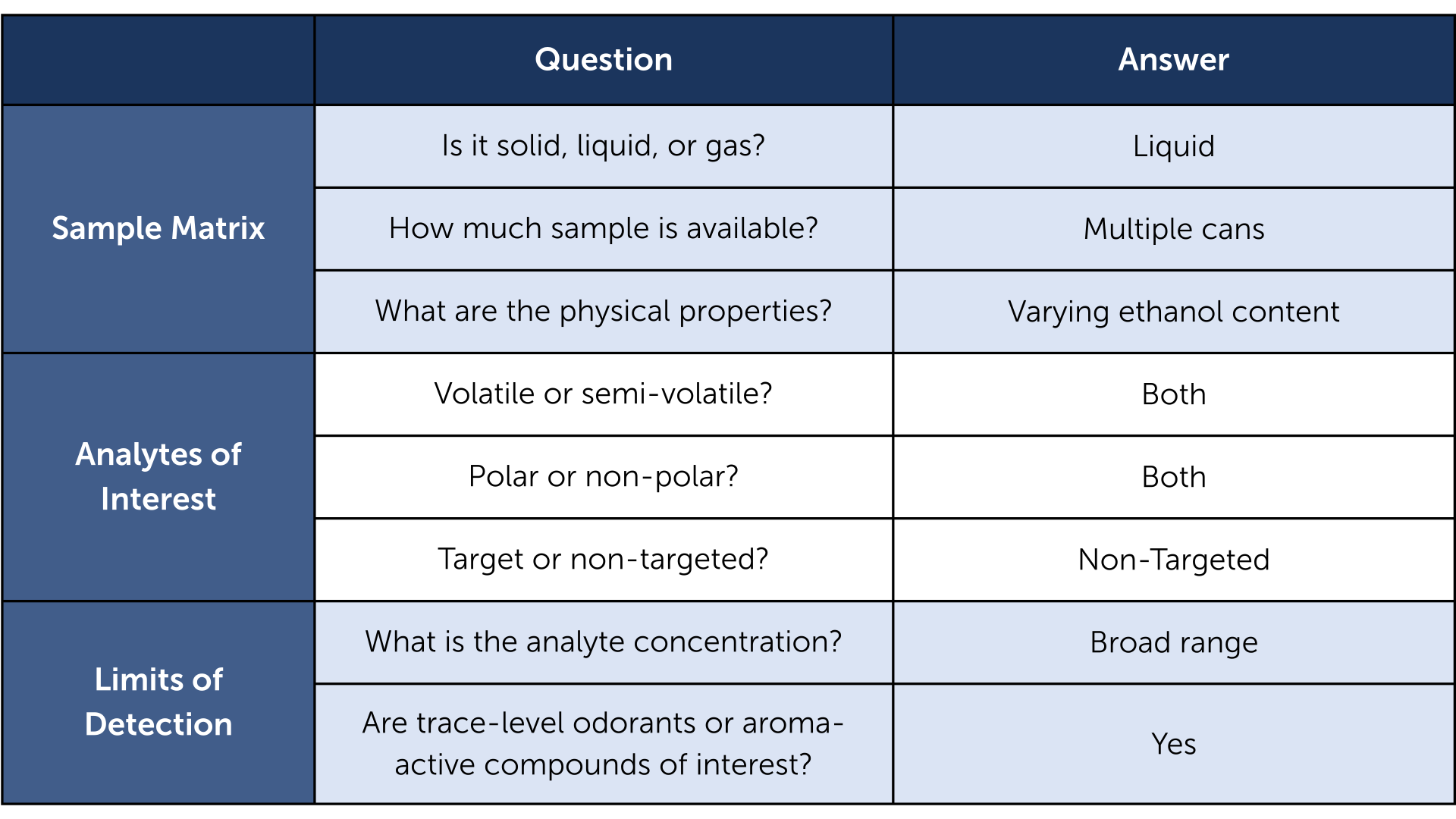
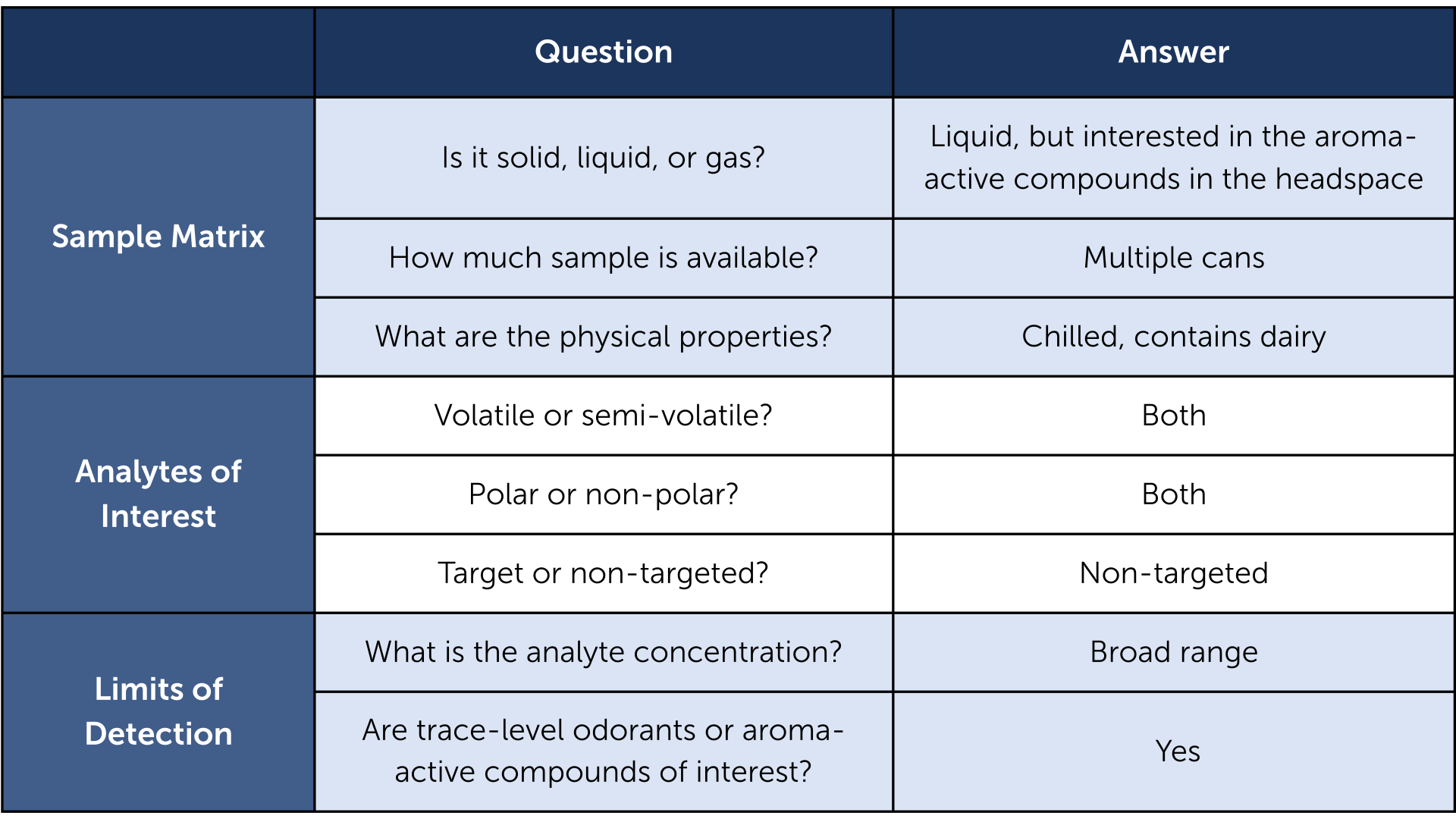
Questions that Guide You to the Right Extraction Technique
Selecting an extraction technique begins with understanding these key factors: the sample matrix, the analytes of interest, and the required limits of detection.
The answers to these questions help determine which extraction approach is most appropriate.
Matching the Analytical Challenge to the Extraction Technique
In the following case studies, GERSTEL scientists considered these questions to select the appropriate extraction technique for each analytical challenge.
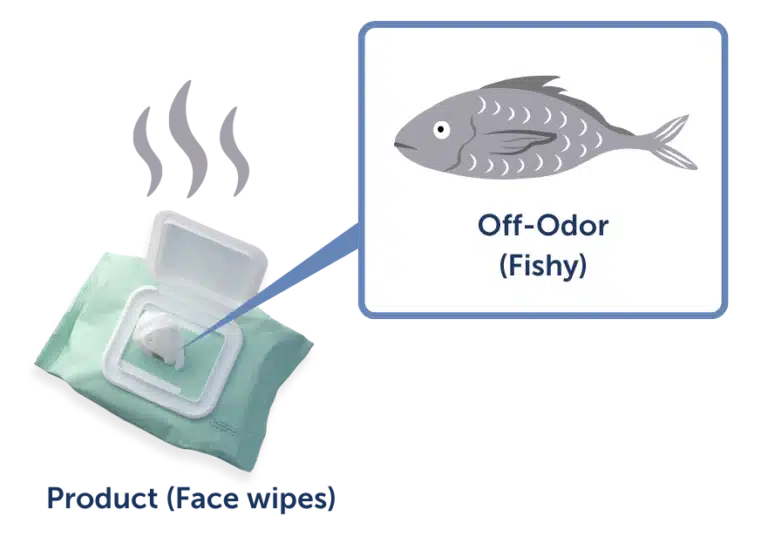
Case Study 1: Off-Odors in Cosmetic Wipes (AppNote 281)
When investigating an unknown off-odor, the extraction technique must capture a broad range of compounds, including trace-level odorants.
Analytical challenge: Identify the compound(s) responsible for a fishy off-odor in a complaint cosmetic wipe.
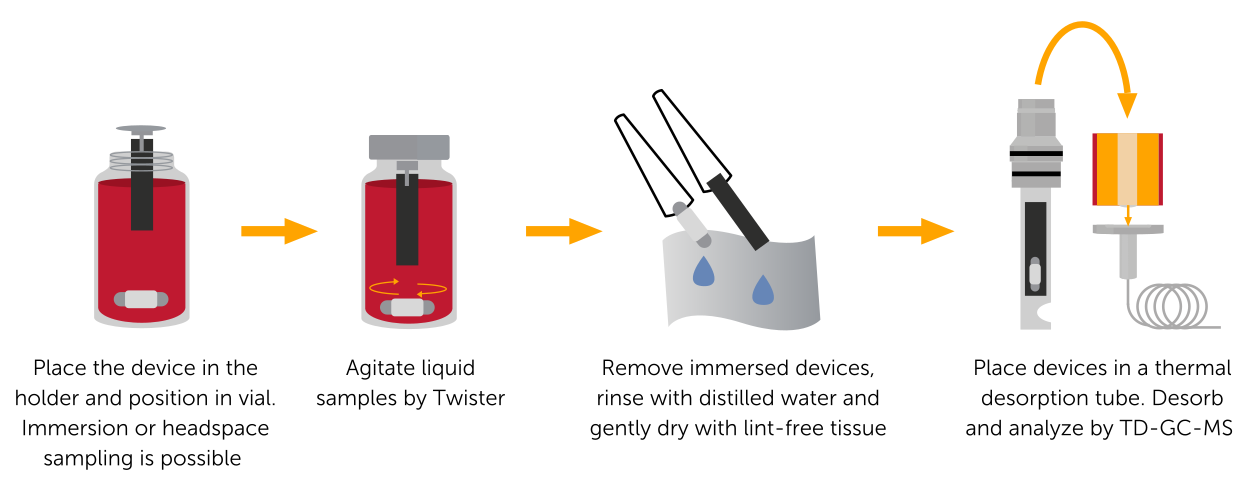
Chosen Extraction Technique: Direct Contact Thin Film-Solid Phase Microextraction (TF-SPME)
- Excellent form factor, providing great surface area exposure to the makeup wipes
- Structurally robust extraction device
- Mixed sorbent coating (e.g., PDMS/HLB) extracts compounds with a wide range of polarities
- High capacity makes it suitable for extracting and detecting low odor threshold off-odors to support a Sensory Directed Analysis (SDA) workflow
Case Study 2: Alcoholic vs. Dealcoholized Beverages (AppNote 285)
While direct-contact TF-SPME was well suited to the solid cosmetic wipe, liquid samples present different extraction considerations.
Analytical challenge: Compare the volatile and sensory profiles of alcoholic and dealcoholized beverages.
Chosen Extraction Technique: Immersive Twister®/TF-SPME
- Directly interacts with the liquid sample to maximize extraction efficiency
- Has a total phase volume of 33 μL with mixed sorbents to extract a broad polarity range
- Provides sufficient analyte mass on column for simultaneous mass spectral (MS) and olfactory detection
Case Study 3: Coffee Aroma Profiling (AppNote 293)
In some applications, the goal is not to extract directly from the sample, but to characterize the compounds present in its headspace.
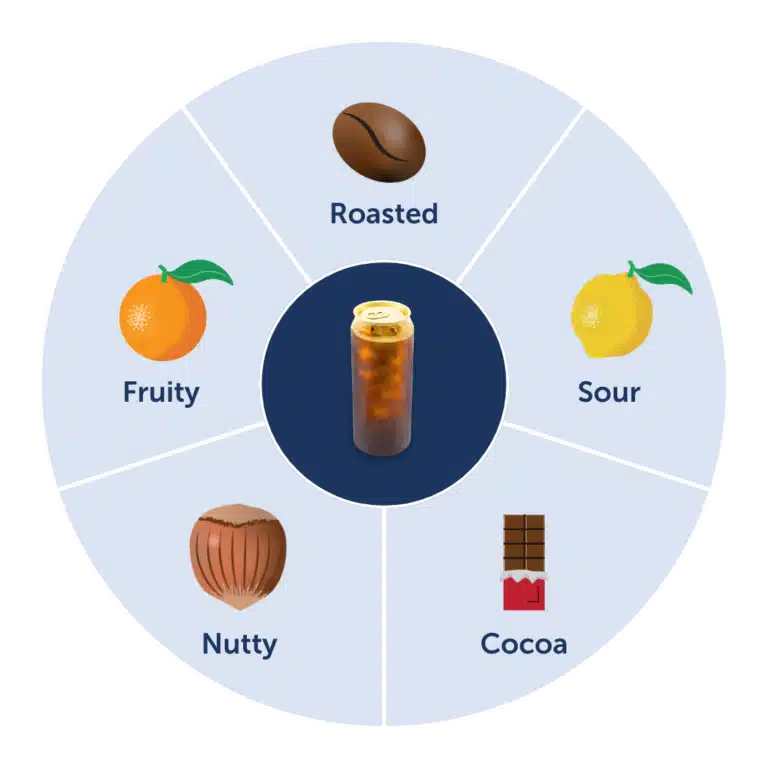
Analytical challenge: Characterize the aroma profile of chilled ready-to-drink coffee under realistic consumption conditions.
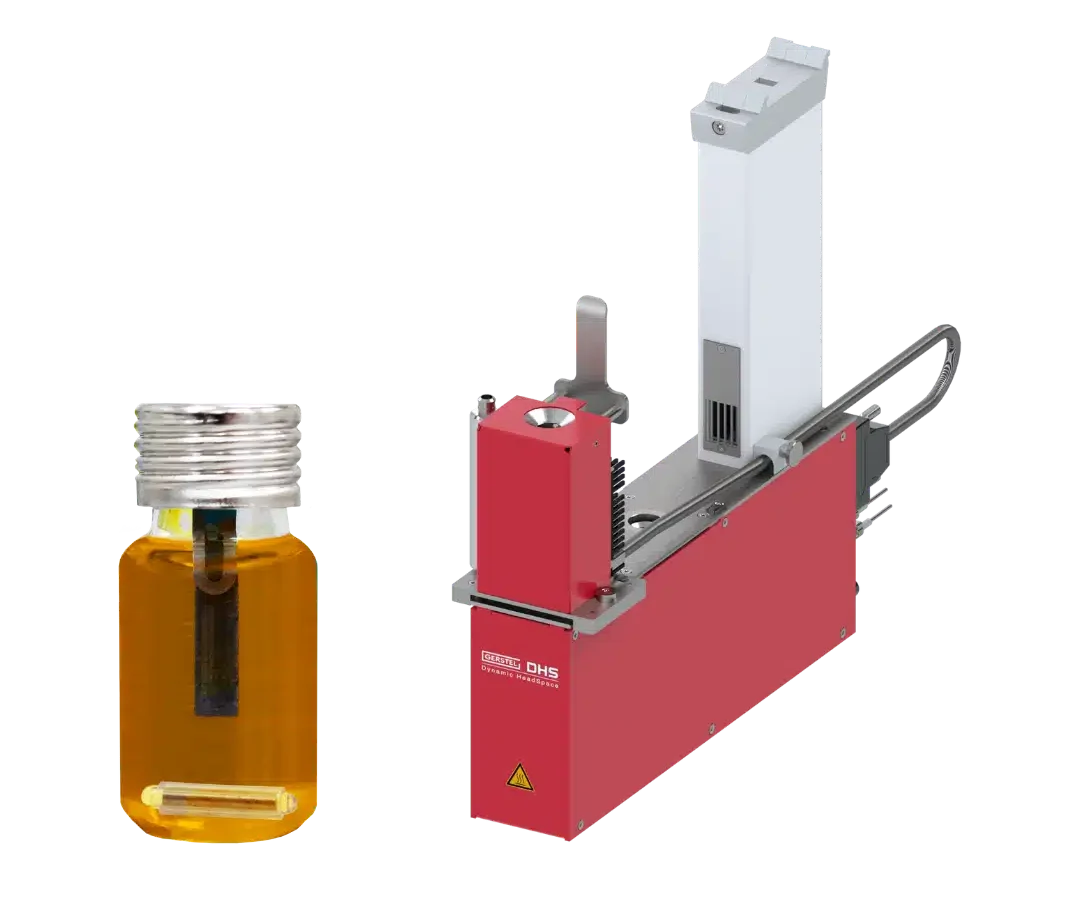
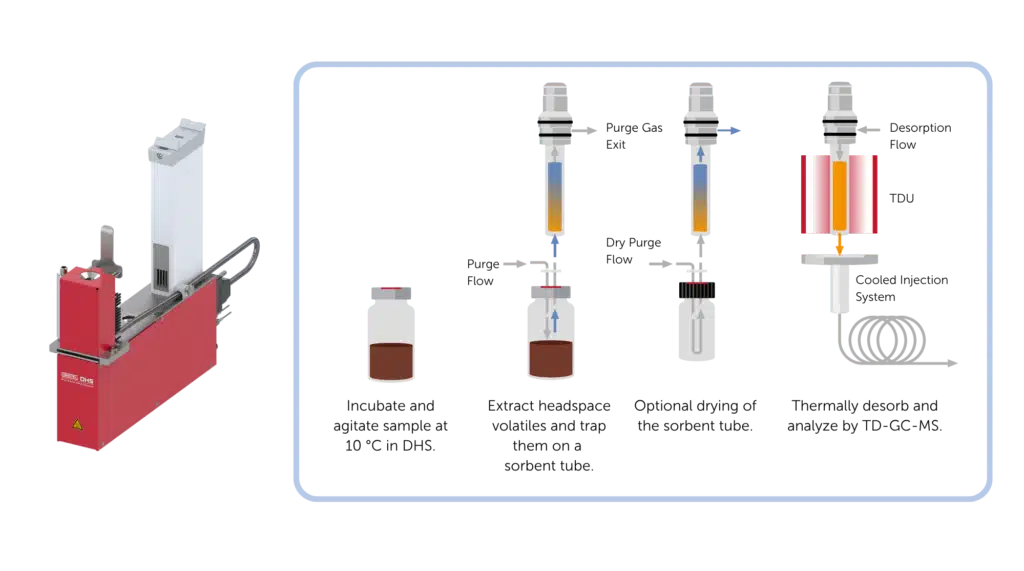
Chosen Extraction Technique: Dynamic Headspace (DHS)
- Preserves aroma profiles at product serving temperature, 10 °C
- Achieves lower detection limits than SHS or HS-SPME
- Is non-equilibrium based
- Effectively enriches a broad range of analytes, including trace-level odorants
Extraction to Olfaction
Selecting the appropriate extraction technique is only the first step. Once compounds are extracted, the next challenge is determining which of the hundreds of compounds detected contribute to the perceived aroma.
Continuing with the example of AppNote 281, TF-SPME efficiently enriched the volatile and semi-volatile compounds present in the complaint sample. However, GC-MS alone cannot determine which compounds are responsible for the perceived fishy off-odor.
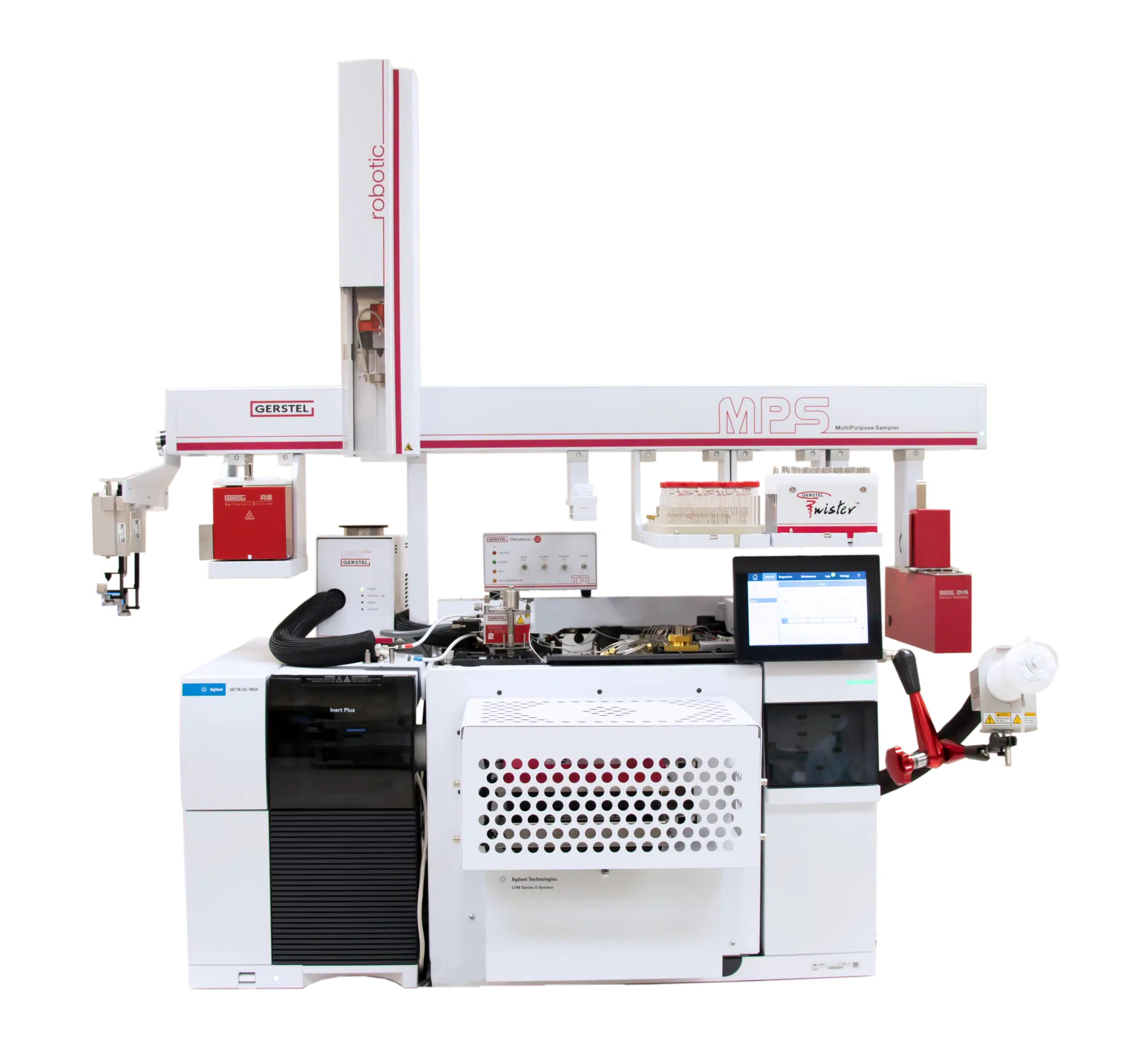
Because many detected compounds may not be aroma-active, the extract must also be analyzed with the Olfactory Detection Port (ODP 4) for simultaneous GC-MS analysis and sensory detection, or GC-O/MS. At the ODP, the analyst will detect the perceived odors as they elute from the GC column.
Resolving Coelution
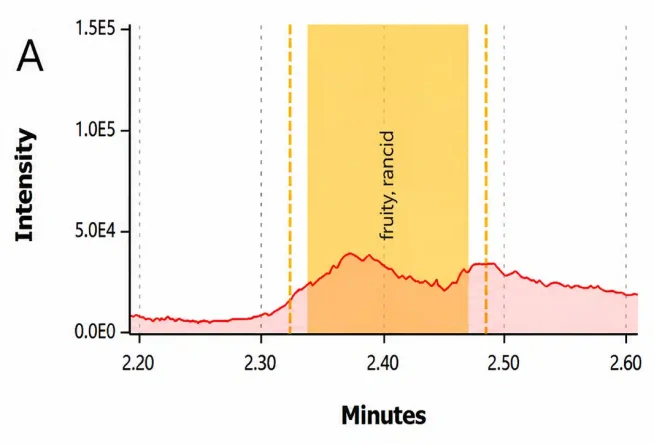
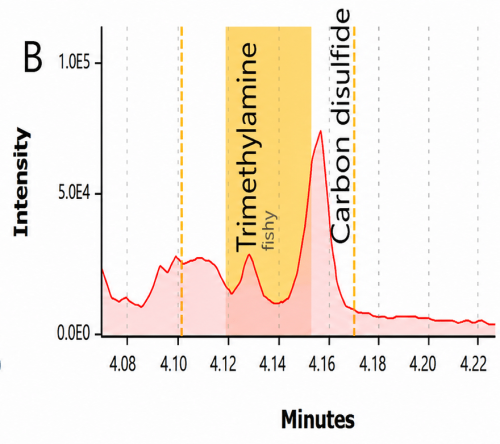
At a retention time of ~2.4 minutes, the analyst detected the perceived fishy off-odor. However, multiple compounds coeluted within this retention window, preventing confident identification of the odor-active compound.
In this scenario, a Selectable 1D/2D-GC-O/MS system can be used to heart-cut the coeluting region of interest for additional separation on a column of dissimilar stationary phase. In doing so, the peak corresponding to the fishy odor was isolated and identified as triethylamine.
It is always best practice to obtain a standard of the tentatively identified aroma-active compound to confirm its retention time, mass spectrum, and odor match with the sample.
Conclusion
Successful sensory profiling is rooted in the chosen extraction technique. The extraction technique dictates which compounds are introduced into the instrument and directly influences the quality of chromatographic and sensory data. By first considering the sample matrix, analytes of interest, and required limits of detection, analysts can choose the extraction approach best suited to their application.
Once representative extracts have been obtained, GC-O/MS enables identification of aroma-active compounds. When coelution prevents confident identification of aroma-active compounds, a Selectable 1D/2D-GC-O/MS provides the additional separation needed to isolate and identify the responsible analyte. Together, these tools create a unique toolkit for sensory profiling and allow analysts to remain confident in identifying the compounds that shape consumer perception.