Introduction

With the ubiquity of portable devices like phones and laptops, lithium-ion (Li-ion) batteries are abundant in everyday life. While this technology is well known, it is constantly improving. Further, the methods used for analytical monitoring to ensure batteries can work safely and efficiently are continually evolving as well. Measuring residual solvents in battery materials is important to optimize their performance, as high concentrations of unwanted compounds can cause adverse and unintended side reactions. These issues can affect the electrochemical reactions inside the batteries and alter their energy storage and delivery capabilities.
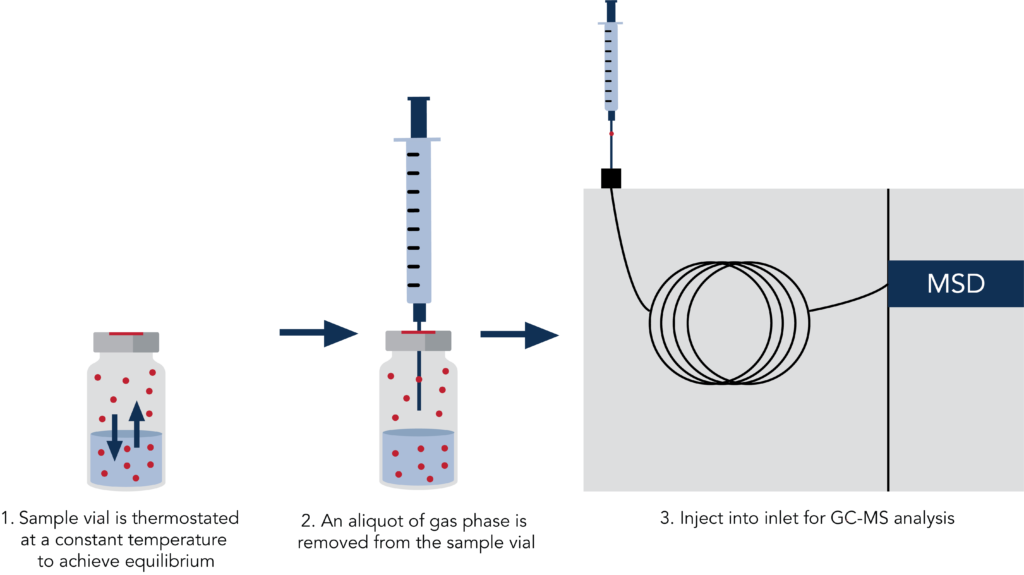
Using GC-MS headspace analysis is a simpler alternative to many current methods using liquid extraction to detect residual solvents. There are multiple headspace techniques commonly used to detect trace-level solvents in samples, including Static Headspace (SHS) and Dynamic Headspace (DHS). However, complexity, analysis time, temperature, and detection limits can vary depending on the technique, which makes it critical to select the best method for battery electrode analysis.
Static vs. Dynamic Headspace
Static Headspace (SHS)
This is an equilibrium-based technique in which a sample is incubated in a sealed vial at a controlled temperature, allowing analytes to partition between the sample and the headspace. An aliquot of the headspace is then introduced into the GC-MS for analysis. Because this approach relies on equilibrium, it can result in higher detection limits and limited recovery of less volatile, higher-boiling compounds. It often requires higher incubation temperatures and longer incubation times.
Dynamic Headspace (DHS)
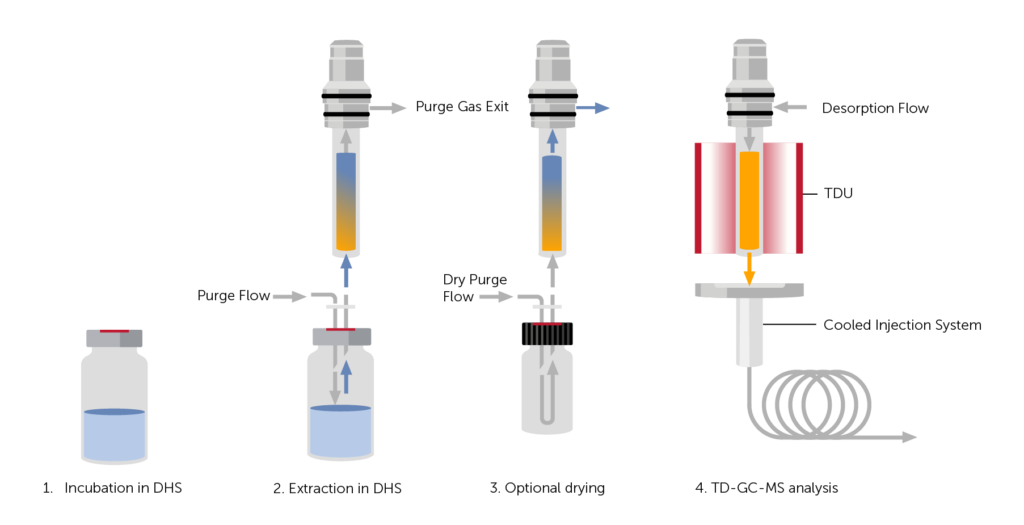
This is a non-equilibrium technique in which the sample headspace is continuously purged, and analytes are trapped onto a sorbent-filled tube. DHS enables high analyte enrichment, exhaustive extraction, and low detection limits at lower incubation temperatures. The analytes are then thermally desorbed and transferred to the GC-MS system for analysis.



Case Study: Residual NMP Extraction from Lithium-Ion Battery Cathodes (AppNote 308)
An important analyte in Li-ion batteries is N-methyl-2-pyrrolidone (NMP), a solvent that is used to help coat cathode slurries onto current collectors. While this solvent is mostly removed by drying during processing, it is important to accurately measure any remaining NMP, as its presence can negatively affect battery power performance and cell capacity over time. However, headspace analyses become more challenging if the compound has a high boiling point and lower vapor pressure, which makes it less readily extracted via SHS analysis. With a boiling point of 202 °C, NMP is one such chemical, and DHS provides a route for improved capture and detection of this analyte.
AppNote 308 demonstrates the advantages of using DHS over SHS when analyzing the NMP in cathodes for Li-ion batteries.