Blogs

Dynamic Headspace & Aroma Dilution Analysis: Identifying Key Aroma Compounds in Cannabis Beyond Terpenes

Scent as a Selling Point

In the past five years, cannabis has been legalized in 24 states for recreational use, and in 40 for medical use (1). Not only is the cannabis industry growing and valued at billions of dollars due to these recent changes in legislation, but also due to shifting consumer expectations and preferences. Today’s buyers are drawn to cannabis products that offer a rich sensory experience.


What About the Terps?

When it comes to aroma and flavor diversity in cannabis, much of the emphasis is on terpenes, or what many users refer to as the “terps”. Terpenes are naturally found in cannabis sativa, indica, and hybrid varieties, contributing to distinctive fragrance profiles. Specifically, limonene, terpinolene, β-myrcene, and caryophyllene are some of the most abundant terpenes across the board. Beyond their sensory impact, terpenes can also interact synergistically with cannabinoids, potentially influencing therapeutic effects and enhancing the overall user experience.

Abundant Terpenes and Their Aroma Descriptors

While terpenes dominate most conversations around cannabis, recent research has revealed additional sensory-active compounds that exist at extremely low concentrations, specifically sulfur compounds and indole derivatives (2-3). However, this work lacks complementary olfactory data to link sensory and chemical information.

Profiling of cannabis is simple when abundant and highly concentrated compounds, like terpenes, are easily detected, but what about trace-level compounds that may dominate sensory perception? GERSTEL AppNote 292 addresses this challenge by combining Sensory Directed Analysis (SDA) with Dynamic Headspace (DHS) extraction and Aroma Dilution Analysis (ADA).

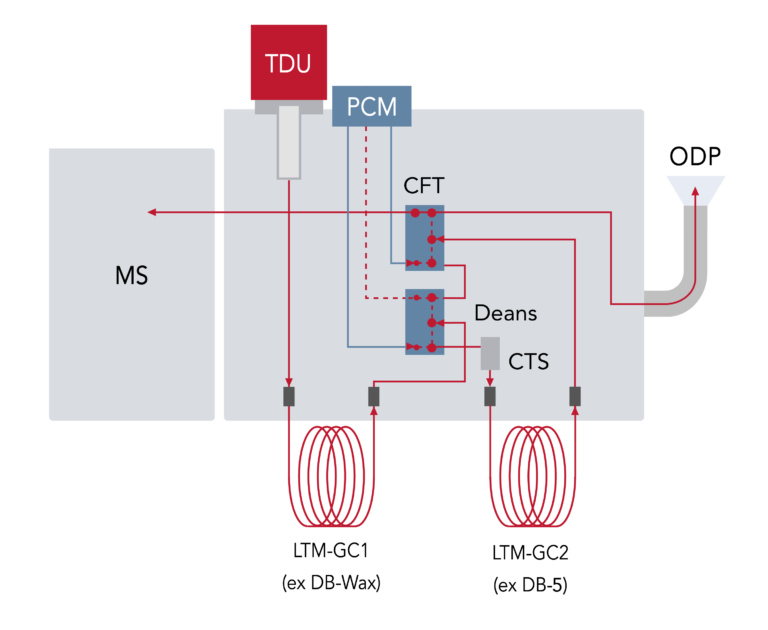
GERSTEL's SDA Method Workflow

Capturing Cannabis’ Most Potent Aromas

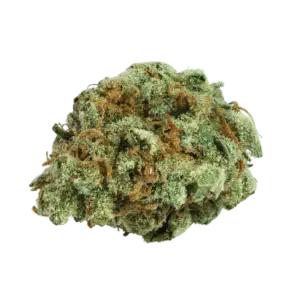
A Peach Crescendo cannabis flower was purchased from a local dispensary in Baltimore, MD. While this strain contains approximately 3.0% total terpenes, other potent odorants present at extremely low concentrations drive the perceived aroma. An SDA approach with DHS extraction, ADA, and a Selectable 1D/2D-Gas Chromatography-Olfactometry/Mass Spectrometry (1D/2D-GC-O/MS) system provides a comprehensive solution for identifying the most potent compounds.

Dynamic Headspace Extraction

Because odors span many orders of magnitude, and potent sensory-active compounds often have low odor thresholds, it is essential to employ a high-capacity extraction technique that fully captures the chromatographic and aroma profiles of cannabis. Compared to Solid-Phase Microextraction (SPME) and Simultaneous Distillation/Extraction (SDE), DHS provides key advantages:


Lower detection limits: Continuous purging of the sample headspace enriches analytes onto a high-capacity sorbent-filled tube

Solvent-free extraction: Preserves sample integrity and reduces the environmental impact

Fully automated workflow: Precise temperature and flow control promote reproducibility and support high-throughput analyses

Aroma Dilution Analysis

Traditional Aroma Extract Dilution Analysis (AEDA) relies on solvent-based extracts from liquid-liquid extractions or SDE to identify the most potent sensory-active compounds in a sample. However, it depends on serial dilutions to calculate flavor dilution (FD) factors, which represent the highest dilution at which a sensory-active compound is still perceived. Because DHS concentrates volatiles directly onto a sorbent-filled tube, an alternative approach, Aroma Dilution Analysis (ADA), was used.

ADA offers a streamlined and automated alternative. Rather than preparing serial dilutions by hand, ADA dilutes the sample directly through split ratios at the GERSTEL Cooled Injection System (CIS 4) and/or the Thermal Desorption Unit (TDU 2). The ADA approach:

Reduces manual sample manipulation

Eliminates excess solvent usage

Determines FD factors reliably and simply with GERSTEL’s Olfactory Data Interpreter (ODI) software

1D/2D-GC-O/MS

While ADA reveals which odorants are perceived at the highest dilutions, it alone does not provide definitive compound identification. Cannabis is a complex matrix, and many of its most potent compounds coelute in a single-dimensional separation. 1D/2D-GC-O/MS allows for automated switching between single-dimensional separation and heart-cutting into the second dimension when coelution is observed.

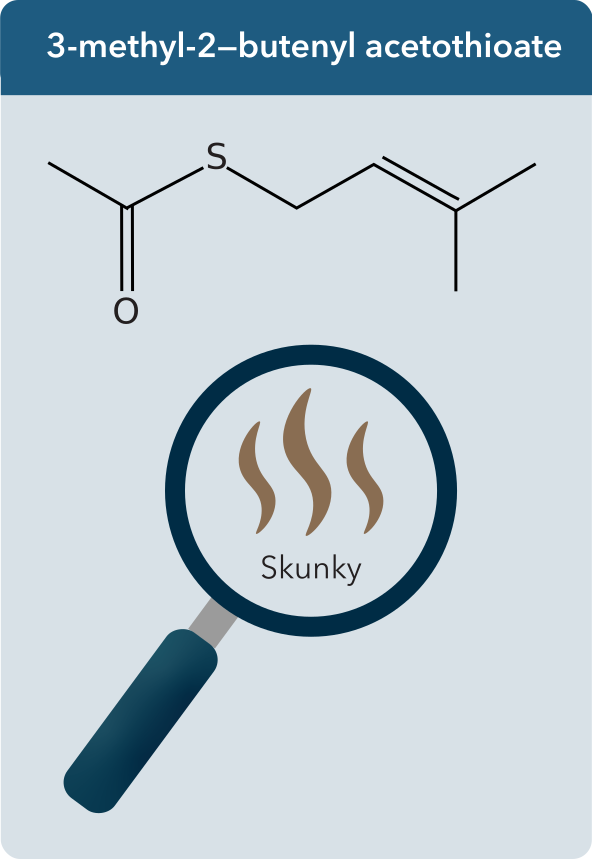
The Selectable 1D/2D-GC-O/MS played a vital role in identifying potent odor compounds in the Peach Crescendo by resolving two areas of coelution. One example of which is shown in the figure below. A skunky aroma coeluted with terpinolene in the first dimension, but terpinolene has floral and citrus odor descriptors, so it was not responsible for the skunky odor. Upon heart-cutting this region to a column of dissimilar phase, the skunky aroma correlated with a peak that was tentatively identified as 3-methyl-2-butenyl acetothioate. This revealed that a sulfur compound, not a terpene, was potent to the Peach Crescendo strain, with a calculated FD factor of 256!

¹D (A) and ²D (B) chromatograms of odor region described as skunky at 11.1 minutes and mass spectrum (C) of the separated peaks.

Volatile Sulfur Compounds

Yes, terpenes contribute heavily to cannabis’s aroma profile, but many of its most potent aromas arise from trace-level odorants, particularly volatile sulfur compounds (VSCs). VSCs reportedly have odor detection thresholds in the parts-per-trillion range, meaning they are perceived strongly at the nose despite being undetected by the MS.

VSCs contribute significantly to the well-known skunky, savory, gasoline, and tropical notes used to describe numerous cannabis strains. Because VSCs are among the most potent sensory-active compounds, they shape each strain’s unique aromatic fingerprint. VSC potency determines consumer perception of product freshness and quality (4-5), not terpenes. The skunkier the strain, the greater its acceptance.

The Greater Scientific Impact
The identification of 3-methyl-2-butenyl acetothioate in the Peach Crescendo is one example of a VSC that likely would have remained undetected without an SDA workflow that combined the following GERSTEL solutions:

  1. The extraction power of DHS

  2. The FD factors from ADA and the ODI software

  3. And the separation power from a Selectable 1D/2D-GC-O/MS

Given the role of VSCs and other potent sensory-active compounds in delivering appealing products, producers must maintain consistency across cultivars as the industry continues to grow. Combining olfactory data with chemical identifications is readily achieved using the GERSTEL solutions mentioned. To discover how additional sensory-active compounds were unveiled as most potent in the Peach Crescendo, read AppNote 292 below.

References

  1. https://disa.com/marijuana-legality-by-state/
  2. Iain W. H. Oswald, Marcos A. Ojeda, Ryan J. Pobanz, Kevin A. Koby, Anthony J. Buchanan, Josh Del Rosso, Mario A. Guzman, and Thomas J. Martin. ACS Omega2021 6 (47), 31667-31676
  3. Iain W. H. Oswald, Twinkle R. Paryani, Manuel E. Sosa, Marcos A. Ojeda, Mark R. Altenbernd, Jonathan J. Grandy, Nathan S. Shafer, Kim Ngo, Jack R. Peat III, Bradley G. Melshenker, Ian Skelly, Kevin A. Koby, Michael F. Z. Page, and Thomas J. Martin. ACS Omega2023 8 (42), 39203-39216
  4. https://greenpharms.com/cracking-code-cannabis-aroma-science/
  5. https://blog.signature-products.com/behind-cannabis-skunky-scent/

Learn More about GERSTEL Solutions for Cannabis Aroma: