Introduction


Liquid-liquid extraction (LLE) has been a cornerstone of analytical sample preparation for decades. From environmental testing and clinical toxicology to pharmaceutical analysis and food safety applications, LLE remains one of the most effective techniques for isolating target analytes from complex matrices. Despite its widespread use, traditional manual LLE presents numerous challenges that can negatively impact reproducibility, consistency, laboratory productivity, and analyst safety.
As modern analytical laboratories face increasing sample loads and growing demands for data quality, robotic samplers capable of automating LLE are transforming how chemists approach sample preparation. Automation not only addresses many of the limitations associated with manual workflows but also enables laboratories to achieve greater efficiency while improving overall analytical performance.
The Drawbacks of Manual LLE
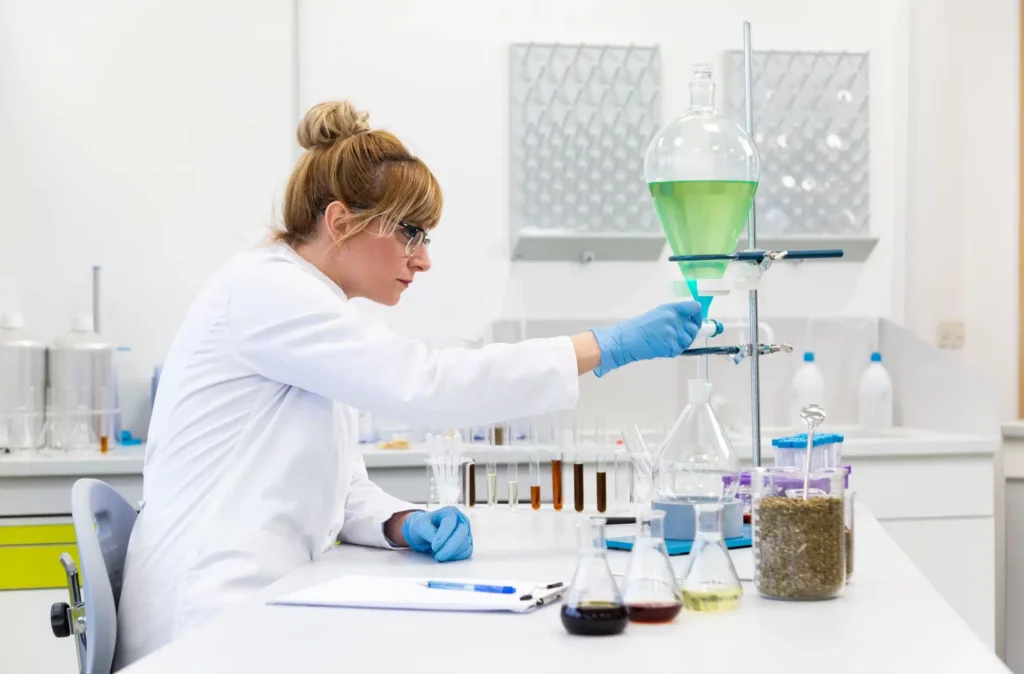
Although the basic principles of LLE are straightforward, executing the procedure consistently by hand is far from simple. Manual LLE requires multiple repetitive steps, including solvent addition, mixing, phase separation, transfer of extracts, and often evaporation and concentration.
These challenges can affect laboratory performance in several ways:
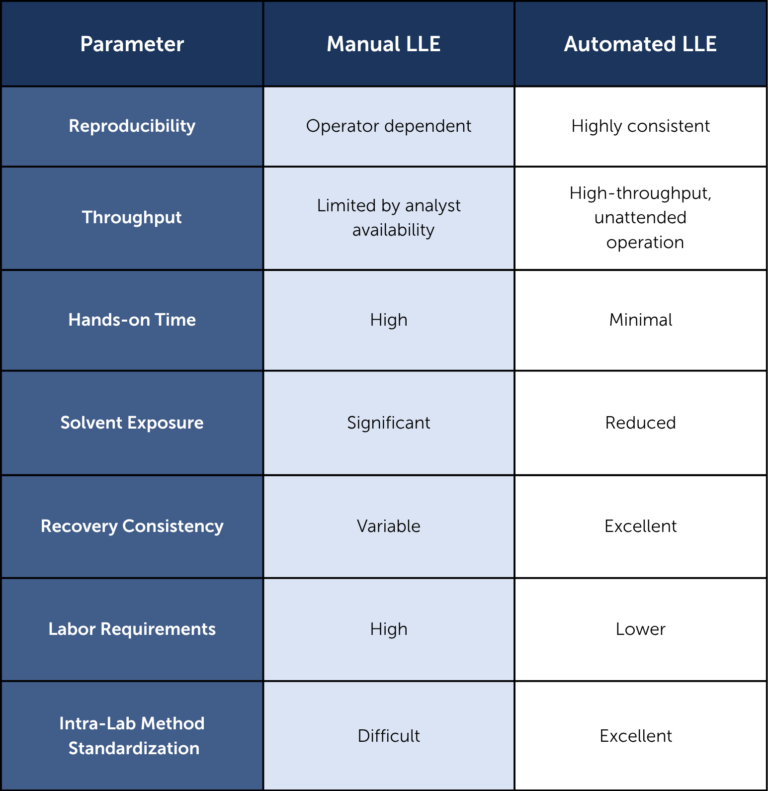
Variable Recoveries: Small differences in mixing conditions, phase separation, or transfer techniques can lead to variable recoveries. In regulated environments where precision and reproducibility are critical, these inconsistencies can compromise method performance and increase the need for repeat analyses.
Safety Concerns: Many LLE procedures involve volatile organic solvents such as hexane, dichloromethane, ethyl acetate, or methyl tert-butyl ether. Repeated manual handling increases analyst exposure and creates additional safety concerns.
Time-Consuming Labor: Processing large sample batches manually can consume hours of valuable laboratory time. Analysts often spend much of their day performing repetitive pipetting and solvent handling tasks rather than focusing on data review, method development, or making decisions based on the data being collected.
As sample volumes continue to increase, manual extraction procedures become a limiting factor. Analytical instruments such as LC-MS/MS and GC-MS systems can analyze hundreds of samples per day, but manual sample preparation often struggles to keep pace, creating workflow bottlenecks.
Why Automated LLE is Critical for Laboratories
Robotic samplers able to automate LLE address these challenges by standardizing every step of the process. Precise solvent delivery, controlled mixing, reproducible phase separation, and automated transfer operations help eliminate many sources of variability.
Key advantages of automation include:
Improved Safety: Automation of LLE procedures minimizes direct solvent handling and reduces analyst exposure to hazardous chemicals. Closed systems also decrease solvent evaporation and help maintain a safer laboratory environment.
Enhanced Reproducibility: Standardized workflows reduce random variation and improve method robustness. Laboratories can establish validated procedures with confidence that every sample will be treated consistently, regardless of who operates the system. This is particularly important in regulated industries such as pharmaceutical analysis, forensic toxicology, clinical diagnostics, and food safety testing.
Higher Sample Throughput: By automating LLE procedures, multiple samples can be processed simultaneously while operating unattended. Analysts are freed from repetitive extraction tasks and can focus on higher-value activities such as reviewing analytical data or developing new applications. By reducing hands-on time, laboratories can increase sample throughput without increasing staffing requirements.
Case Study: Mycotoxin Determination in Food
In a recent application for the extraction and cleanup of mycotoxins in food samples (AppNote 303), GERSTEL describes a fully automated LLE and cleanup workflow that demonstrated excellent analytical performance for the determination of aflatoxins and ochratoxin A in multiple food matrices, with extraction efficiencies averaging 96.6%, calibration linearity of R² ≥ 0.99, and QC accuracies ranging from 97.2–99.5% with precision values averaging below 5% RSD.
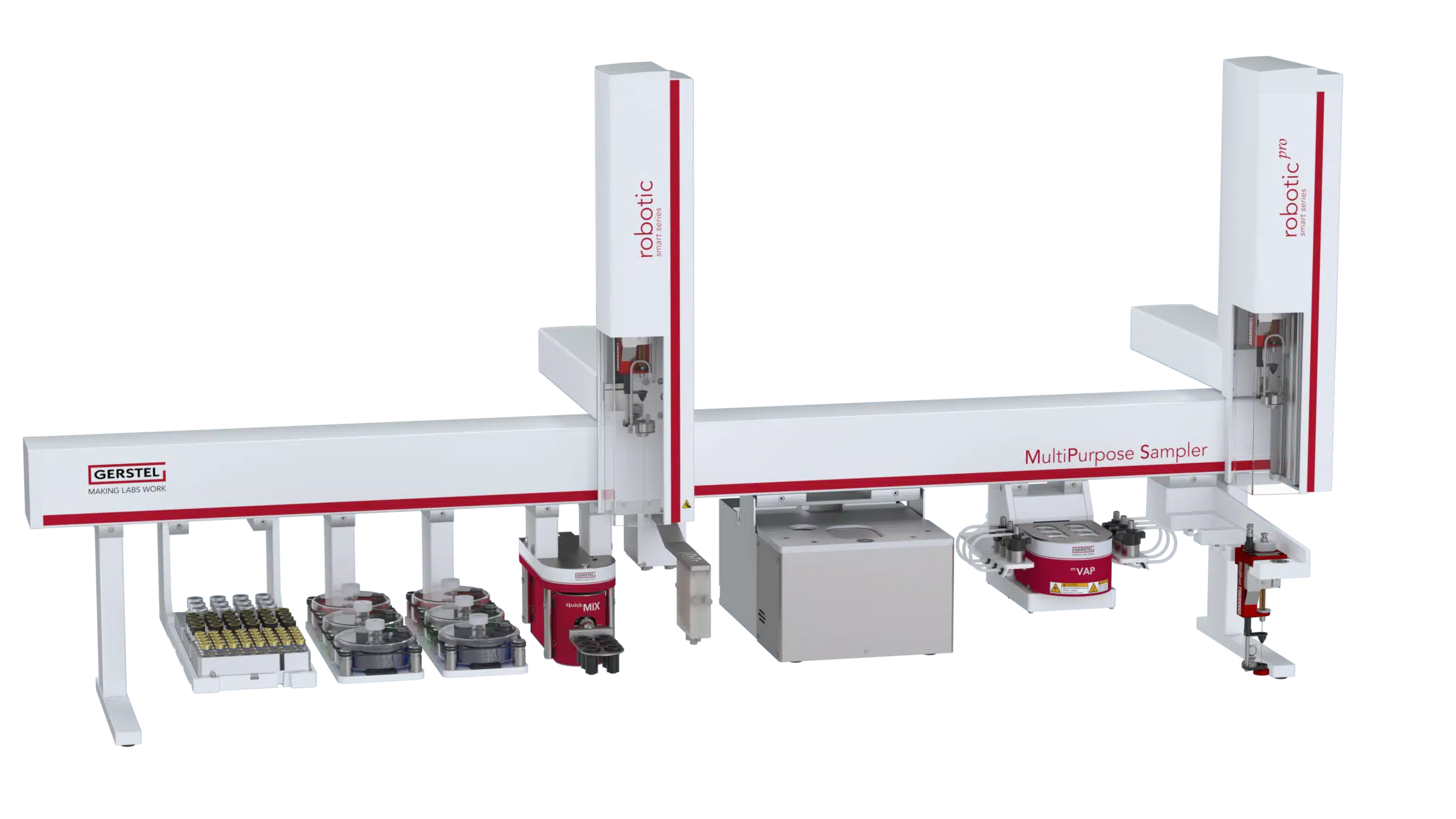
These results highlight the high accuracy and reproducibility achievable through automated sample preparation, minimizing variability commonly associated with manual handling. By automating solvent addition, mixing, centrifugation, SPE cleanup, and LC-MS/MS injection, the GERSTEL MPS roboticPRO system provides consistent sample processing while reducing human error and improving data quality. For analytical laboratories, this automation increases throughput, enhances method robustness, and enables reliable, unattended analysis of large sample batches, making it particularly valuable for food safety monitoring applications.
Conclusion
Today’s LC-MS/MS and GC-MS platforms provide extraordinary analytical performance and high throughput. However, instrument performance is only as good as the quality and consistency of sample preparation. Automated LLE enables laboratories to maximize instrument utilization by ensuring a continuous flow of consistently prepared samples. Rather than having highly sophisticated analytical instruments waiting for manually prepared samples, automation creates a balanced workflow that improves overall laboratory productivity.
Implementing automated LLE is more than a convenience; it is a strategic investment in data quality, productivity, and laboratory sustainability. By eliminating many of the challenges associated with manual extractions, automation allows analytical chemists to focus less on repetitive sample preparation and more on generating reliable scientific results.
As the number of samples needing to be analyzed continues to rise and quality requirements become increasingly stringent, automated LLE is rapidly becoming an indispensable tool for the modern analytical laboratory.