Introduction

The dietary supplements market is valued at over 150 billion dollars (U.S.) worldwide. Dietary supplements are manufactured products that come in many forms, such as pills, capsules, powders, liquids, or tablets. They are used to supplement a person’s diet. The nutrients can be synthetic or extracted from natural sources. Many of these products contain flavoring agents, making them more palatable.
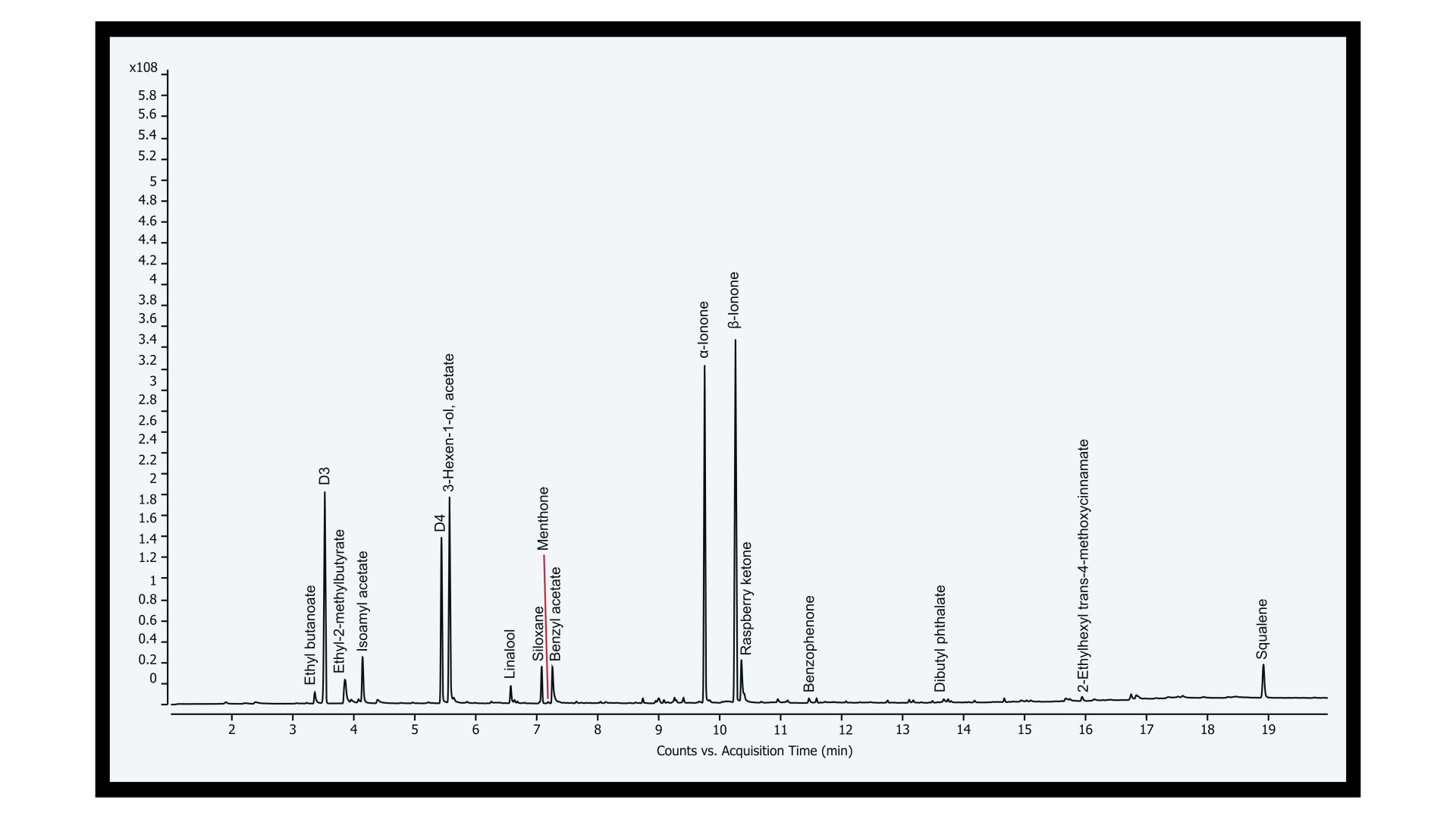
Many flavor/fragrance compounds have low odor/taste thresholds. Small changes in concentration can have a major impact on customer acceptance of the final product. Off odors and flavors often result in customer complaints. Identification and quantification of flavor and off-flavor compounds in these product types are important for quality control, competitive analysis, and customer complaint samples.
GERSTEL Solutions for Flavor Analysis in Dietary

The GERSTEL MPS Robotic sampler with TDU 3.5⁺ option, GERSTEL CIS 4 Cooled Injection System with Liquid Nitrogen cooling option, GERSTEL ISDP⁺, and Agilent GC-MS are an excellent combination for the analysis of flavor compounds in dietary supplements.



Thermal Desorption
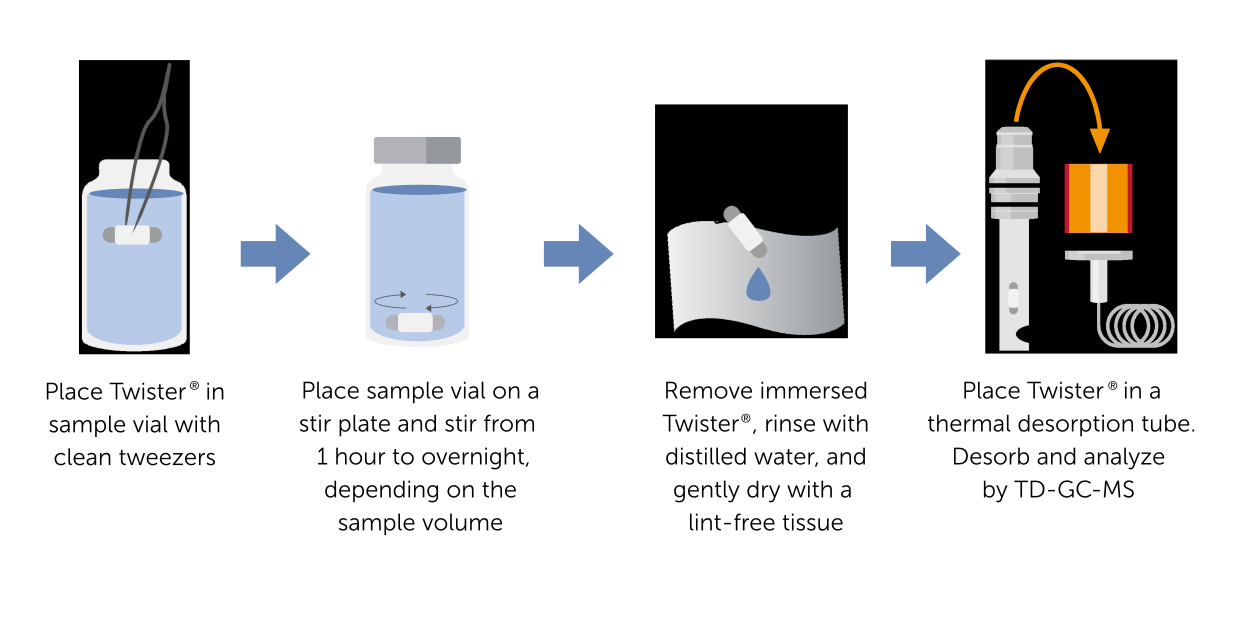
Thermal desorption is an injection technique for gas chromatography where a liquid,

The GERSTEL TD 3.5⁺ provides discrimination-free trapping of compounds without the need for valves and transfer lines. This is a requirement for the determination of unknown compounds (non-targeted analysis). The TD 3.5⁺ can be used with SPME, static headspace and liquid injections, direct thermal extraction of solid samples, desorption of sorbent tubes for air sampling, desorption of Twisters and TF-SPME devices, and any other thermal desorption application.
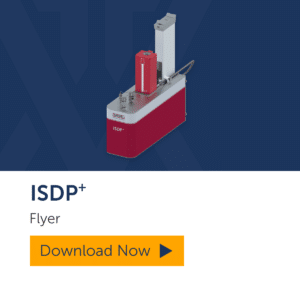
Internal Standard Dry Purge⁺ (ISDP⁺)
The GERSTEL ISDP⁺ is a fully automated solution for spiking TD 3.5⁺ tubes with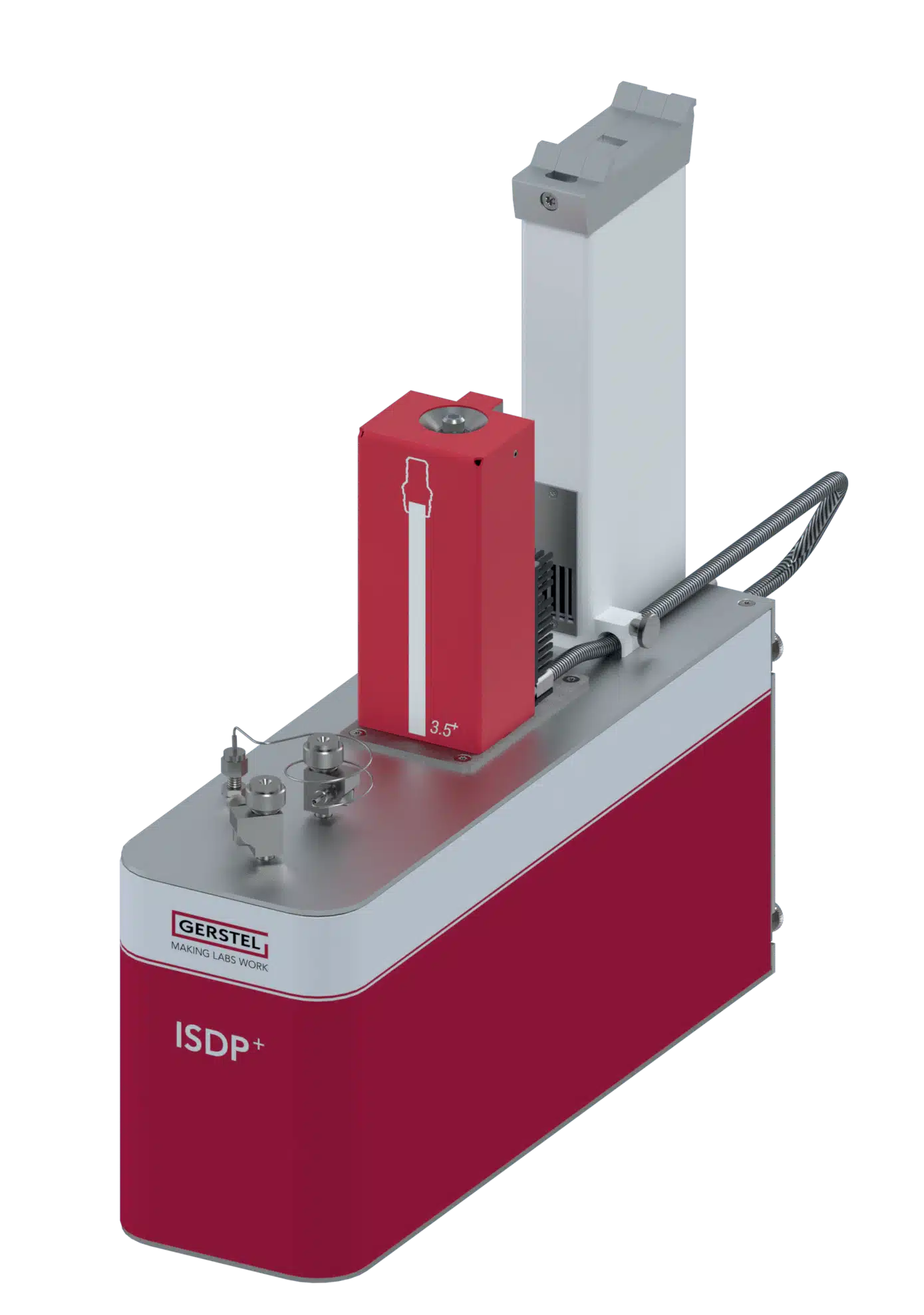

Key capabilities of the ISDP⁺ include:
- Choice of liquid or gas standards
- Automated tube spiking with variable volumes
- Spiking in sampling direction just before analysis or in batch mode
- Automated generation of calibration curves
- Fast and efficient drying of tubes in sampling flow direction


Conclusion

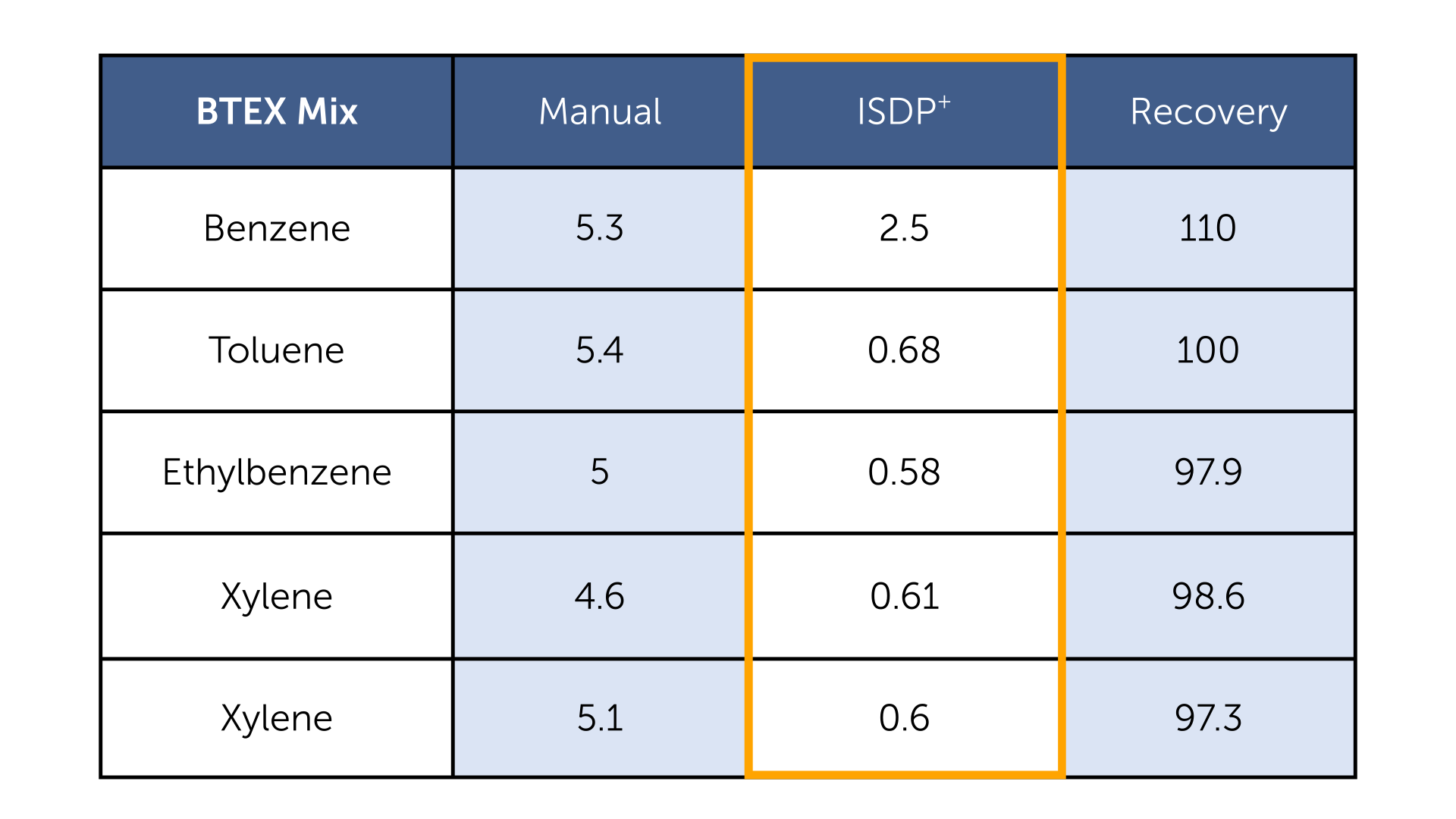
AppNote 283 demonstrates the use of the GERSTEL TD 3.5⁺ with ISDP⁺ as an automated workflow for accurate flavor compound determination. The ISDP⁺ can be used to automatically add both liquid and gas standards to a thermal desorption tube. It can also create calibration curves, which can be used for quantitation of air samples, TF-SPME and Twister extracts, or samples analyzed by direct thermal extraction.
Automation using the GERSTEL TD 3.5⁺ with ISDP⁺ results in improved precision, automated standard addition, and reproducible quantitation that reduce variability and increase confidence in analytical results.